
Drain blockages are a common but frustrating problem that can lead to significant inconvenience, costly repairs, and even health hazards. To better understand the causes behind these blockages, we conducted a short survey, reaching out to over 400 members of the National Association of Drainage Contractors (NADC) and DrainSafe.
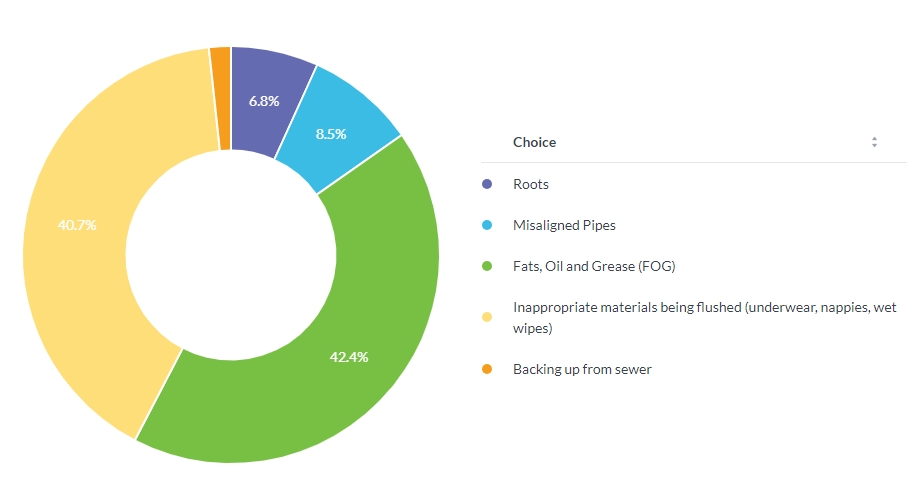
NADC and DrainSafe members were asked: “What is the most common reason you find for a blocked drain?”
The User’s Role in Drain Blockages
A staggering 4 out of 5 drain blockages (83.1%) are caused by the very people using the drainage systems—us. This statistic highlights the need for greater awareness and responsibility regarding what we flush or pour down our drains. The survey revealed that half of these user-caused blockages are due to inappropriate materials being flushed. Items like wet wipes, nappies, and even underwear are being disposed of in toilets, leading to significant blockages. Despite many products being marketed as “flushable,” they often do not break down as effectively as toilet paper, causing clogs that can lead to major plumbing issues.
Equally concerning is the other half of user-caused blockages, which result from the accumulation of fats, oils, and grease (commonly known as FOG). When these substances are poured down the sink, they can solidify in the pipes, creating a sticky trap for other debris. Over time, this buildup can become a major obstruction, requiring professional intervention to clear.
The Impact of Structural Issues
While user habits are a significant contributor to drain blockages, it’s important not to overlook the role of structural issues. According to the survey, 15.3% of all blockages are due to problems within the drainage system itself, such as broken or misaligned pipes and tree root intrusion.
These structural issues are not something that can be easily prevented by changing our behavior—they require professional assessment and repair. Broken or misaligned pipes can occur due to age, ground movement, or poor installation, leading to cracks and gaps where debris can accumulate. Tree roots are another common culprit, as they naturally seek out moisture and can infiltrate pipes, causing blockages and even ruptures.
Addressing the Problem
Understanding the causes of drain blockages is the first step toward prevention. For users, the key takeaway is to be more mindful of what goes down the drain. Only flush materials that are designed to break down in water, and never pour fats, oils, or grease down the sink. Instead, dispose of these materials in the trash or recycle them where possible.
For structural issues, regular maintenance and inspections are crucial. If you experience recurring blockages, it may be a sign of a deeper problem within your drainage system. In such cases, contacting a professional to assess and repair the issue is essential to prevent further damage. You can find a professional drainage contractor here
Conclusion
Drain blockages are a significant issue, but with greater awareness and proactive measures, many of these problems can be avoided. By changing our habits and staying vigilant about the condition of our drainage systems, we can reduce the frequency of blockages and the headaches they cause. Remember, prevention is always better than cure when it comes to keeping your drains clear and functional.